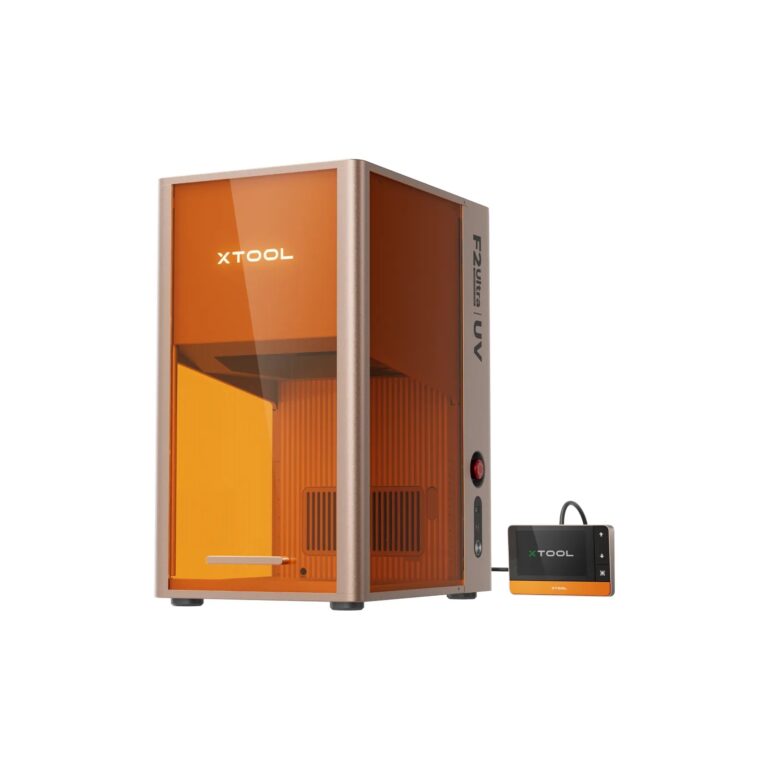
xTool, the world's most sold laser machines!



Metal Laser Cutting: How It Works, What Metals, and Which Machine
Laser cutting has replaced traditional metal fabrication for precision, speed, and versatility — here is everything makers and small businesses need to know before buying a metal laser cutter.

Metal Laser Cutting: Precise, Fast, and Accessible to Small Businesses
Metal laser cutting uses a focused beam of light — not a physical blade — to melt, vaporize, or blow away metal along a precise cutting path. The global laser cutting market is projected to reach $8.8 billion by 2028, with metal fabrication driving the largest share. What was once exclusively industrial technology is now accessible to makers, artisans, and small businesses through desktop fiber laser systems costing a fraction of industrial machines.
How Does Metal Laser Cutting Work?
A focused laser beam strikes the metal surface, heating it so rapidly that it melts or vaporizes along the cutting path. Because the laser never physically contacts the material, tooling wear is eliminated and cutting accuracy remains consistent. An assist gas — typically oxygen, nitrogen, or compressed air — runs simultaneously with the laser. Oxygen accelerates cutting speed on carbon steel through an exothermic reaction; nitrogen produces clean, oxide-free edges on stainless steel and aluminum; compressed air provides a cost-effective option for general-purpose cutting. The combination of laser power, feed speed, focus height, and assist gas determines cut quality.
Fiber Laser vs. CO2 Laser for Metal Cutting
Two laser types are used for metal cutting. CO2 lasers (10,600 nm wavelength) excel at cutting non-metals (wood, acrylic, fabric) but are less efficient on metals — their longer wavelength is poorly absorbed by most metallic surfaces, especially reflective ones. They work adequately on thinner steel sheets but consume significantly more energy and are slower than fiber for equivalent metal cutting tasks.
Fiber lasers (1,064 nm wavelength) are the modern standard for metal cutting. Their shorter wavelength is absorbed 5–10 times more efficiently by metals compared to CO2. Fiber lasers cut faster, consume up to 70% less electricity, maintain their beam quality over years of use, and handle reflective metals (copper, brass, aluminum) that would damage CO2 systems. For any serious metal cutting application, fiber laser is the correct choice.
Which Metals Can a Laser Cut?
Carbon Steel
The most common metal for laser cutting. Carbon steel cuts cleanly, leaves smooth edges, and is the workhorse material for automotive parts, machine components, brackets, and structural elements. Oxygen assist gas significantly boosts cutting speed on carbon steel.
Stainless Steel
Stainless steel requires a slightly more powerful laser but delivers a polished, shiny cut surface — ideal for kitchen appliances, architectural details, artwork, and signage. Nitrogen assist gas prevents oxidation and keeps the cut edge bright and clean.
Aluminum
Aluminum is highly reflective, which challenges CO2 lasers. Fiber lasers handle it efficiently because their 1,064 nm wavelength is well absorbed by aluminum. Applications include aircraft parts, large-format signs, decorative panels, and custom brackets.
Copper and Brass
Highly reflective metals that are difficult to cut with CO2 lasers but manageable with fiber lasers. Used extensively in electronics hardware, decorative elements, musical instruments, and precision custom components.
Titanium
Extremely durable and corrosion-resistant. Laser cutting is the preferred method because it avoids the heat distortion and warping that occurs with traditional cutting tools. Used in aerospace, medical implants, and premium consumer goods.
Understanding Fiber Laser Power Levels
Power determines what thickness of metal a laser can cut and at what speed. Below 100W (desktop range): Suitable for engraving and light marking on metals, and cutting up to approximately 2mm on mild steel. The xTool F2 Ultra MOPA at 60W can cut metal up to ~2mm thickness. 800W–1,200W (mid-range): Reliable workhorse cutting through several millimeters of carbon steel, stainless steel, and aluminum. 2,000W+ (industrial): Can slice through over 10mm of carbon steel and 6mm of stainless steel at high speed, suitable for heavy fabrication.
For small business metal fabrication and prototyping where cuts up to 800W are needed, the xTool MetalFab 800W Laser Welder + CNC Metal Cutter delivers professional mid-range cutting capability with built-in welding and CNC routing — an all-in-one metal workshop in a single machine.
Owning vs. Outsourcing Metal Laser Cutting
Outsourcing laser cutting to a service bureau works for rare, one-off projects. For regular production runs, custom parts, or prototyping, owning your own machine delivers superior ROI: no per-job fees, instant iteration, full design control, and the ability to offer cutting as a service to other businesses. A desktop or mid-range fiber laser typically pays for itself within months when replacing regular outsourcing.
For businesses that need metal marking and engraving alongside cutting, the xTool F2 Ultra 60W MOPA + 40W Diode handles colored marking, serial numbers, barcodes, and surface engraving on all metals with precision that outsourced marking cannot match.
Frequently Asked Questions
Q: What type of laser is best for cutting metal?
A: Fiber lasers are the best choice for metal cutting due to their shorter wavelength (1,064 nm), which metals absorb far more efficiently than CO2 (10,600 nm). Fiber lasers are also faster, more energy-efficient, and handle reflective metals that damage CO2 systems.
Q: Can a desktop laser cutter cut metal?
A: Yes. A 60W MOPA fiber laser can cut mild steel up to ~2mm. Mid-range 800W systems cut several millimeters of common metals. For thicker industrial-grade cuts, 2,000W+ machines are needed.
Q: What assist gas should I use for metal laser cutting?
A: Oxygen for carbon steel (faster cutting), nitrogen for stainless steel and aluminum (clean, oxide-free edges), compressed air as a budget-friendly general-purpose option.
Q: Is metal laser cutting profitable for small businesses?
A: Yes. Custom metal parts, signage, decorative items, and prototyping services all command premium pricing. A mid-range fiber laser typically pays for itself within months when replacing outsourcing fees.